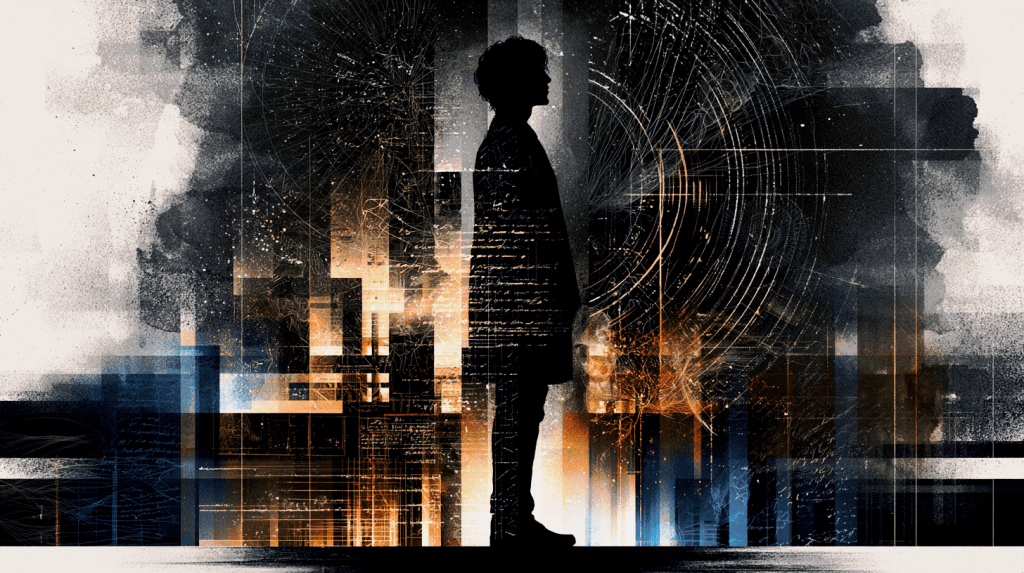
I’ve never looked how I feel. Or the way I think.
For as long as I can remember, I’ve watched the people around me with a quiet, persistent curiosity. Observation is like breathing.
Standing on the midway watching as kids with their parents in tow pulling them along into a line for another ride on the Zipper, as young men try to impress their girl with how many balloons they can pop to get to the giant pink teddy bear that makes her squeal with childlike delight, the older woman enjoying a simpler time while deeply breathing in a fresh box of popcorn. Short, tall, overweight, skinny, young, old and ancient. The varieties are endless.
Early on, I realized how strange it was how easily we judge others by their physical shells- how much meaning we project onto things people had no hand in choosing. So much of this outward shell has been gifted to us. I did nothing to deserve the body I have, or anything tied to the genetics I was given.
When someone treated a tall person with unearned awe, or assumed blue eyes and blond hair automatically given elevated grace, it made no sense to me. Genetics confirmed what common sense suspected: they had earned nothing. They were just beneficiaries of a biological lottery.
So I looked closer. Growing up, in the carnival business, I saw a vast, unfiltered cross-section of humanity across the country. I accumulated a mountain of observational data, but found almost nothing connecting a person’s outward appearance to their internal truth.
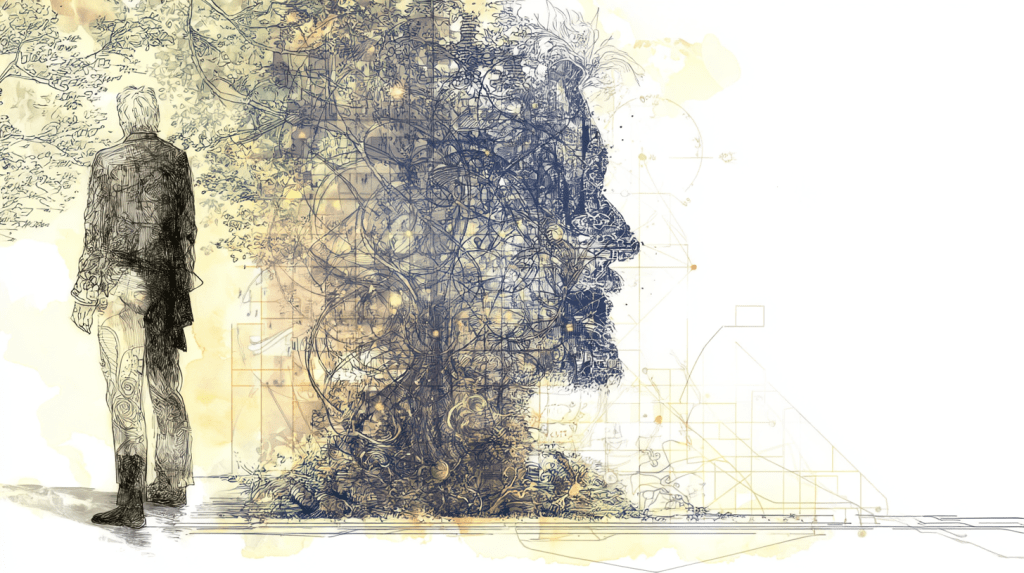
I watched guys in heavy leather jackets – the classic “bad boys” – break down and cry like children at a funeral for a friend hit by a reckless semi-driver. I saw a firefighter, celebrated as a community hero, get drunk at a dinner and pick a petty fight with their girlfriend over a smile passed to a customer. Whenever I got the chance to actually talk to people – to ask if they felt as tough, confident, or special as their outward image was trying to suggest- the answers were always infinitely more complex, fragile, and contradictory than the caricatures they presented to the world.
The closer I looked, the less reliable appearances became.
And yet, people seemed desperate to trade their genuine complexity for a simple label.
In high school, the leather jacket crowd confused me. They were treated as rebels because they threw on a heavy coat and acted a certain role, but the uniform didn’t dictate their character. Later, I’d listen to people talk about their fierce commitment to individualism, right before they put on the exact same uniform as every other “anti-establishment” rebel in the room.
The reality is, most counterculture is just another dress code. Joining a club isn’t individualism. Wearing the uniform of a counterculture doesn’t make you counterculture – it just means you’ve joined a different group. True individualism isn’t a costume or an aesthetic choice; it’s an internal posture. The moment it becomes a mass-produced badge of belonging, it ceases to be individual.
Even tattoos, which might once have carried a rare, solitary defiance, have largely become commonplace. Today, the choice is mostly about which design you select to stick in your skin, but having the ink still doesn’t mean you are the thing. It’s just another signifier. Another membership card. When I worked in retail, I watched people buy specific brands not for the cut or the quality of the fabric, but for how the logo made them feel. They bought the shirt because they wanted the brand to signal something about who they were to strangers. They were buying an identity off the rack.
Not all visible expression is inherently artificial. The deeper truth for me is more about the fact that symbols may be meaningful, but they are never sufficient in expressing who we truly are in full.
I never wanted to decorate the outside to show the world what was on the inside.
I was full of contradictions inside. It didn’t translate well to others. So many who seemed sure that they wanted to show the world that they were for a particular sports team, but not only fans of a team but that being a fan spoke to something about who they were.
Part of this, if I’m honest with my own psychology, comes from a long-standing desire not to be seen. Remaining unmarked was a shield. When you keep the outside plain, you keep yourself free. You don’t broadcast your identity on your skin or your clothes because broadcasting invites projection, reduction, and categorization. You force people to actually interact with you, to know you, rather than letting them read a summary off your sleeve.
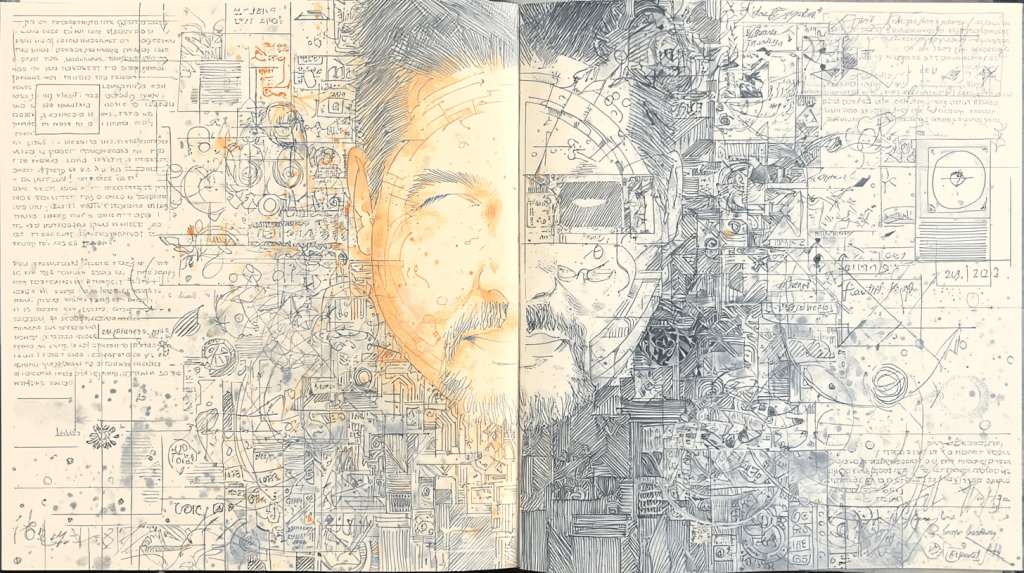
More than that, it comes down to a matter of cost. I’ve endured too much in my life to mark up my body just to join someone else’s club. I am not a joiner. The identity I carry wasn’t purchased at a clothing store or inked on in a parlor over a few weekend sessions. It was forged through survival, hardship, observation, and deep internal processing. To paste a billboard on my skin to prove I’ve lived feels like an insult to what I’ve actually lived through.
I am not anti-art or anti-expression. I am anti-reduction. I refuse to reduce the complex, contradictory reality of who I am into a simple billboard.
When people ask if I’m ever going to get a tattoo, they usually assume I’m afraid of needles, or that I’m just “not a tattoo person.” They miss the point. I actually love the art form. I deeply appreciate the skill, the dedication, and the craft of a master artist.
I just carry my tattoos on the inside.
My ink is in my thinking. It’s in the hard-earned perspectives, the dynamic visual processing, the quiet observations, and the internal paradoxes I live with every day. It’s in how I choose to relate – and not relate – to a world obsessed with surface-level belonging.
I am full of contradictions, unaligned with convention, and entirely un-uniformed. My canvas isn’t public. The marks are all there—permanent, deep, and un-commodified. You just have to pay attention to how I think and act in this world to see them.
That is part of what this space is for.
I have spent much of my life observing, questioning, building, and trying to understand the connections between experiences that do not appear connected at first. The carnival, the investigations, the writing, the systems, the failures, the family, the work of trying to make a living and a life—they have all left their marks.
These essays are an attempt to follow those marks inward. Not to produce a clean summary of who I am, or to turn a complicated life into another public identity, but to share the thinking that has grown out of living it with the hope this may help you in your own life. Some pieces will begin with memory. Others with a question, an experiment, a frustration, or an ordinary morning that reveals more than I expected.
I do not know exactly what shape it will take.
That is part of the point.
The tattoos are on the inside.
This is where I begin showing you how they got there and what comes next.


Leave a comment